
Dental Implants in Manvel: What to Know Before Replacing a Missing Tooth
July 18, 2026 9:00 amA missing tooth can change the way you eat long before it becomes a major concern. You may start chewing on the other side, skipping harder foods, or avoiding the area because it feels awkward. After a while, food may collect in the space, nearby teeth may begin shifting, and the gap can become harder to ignore.
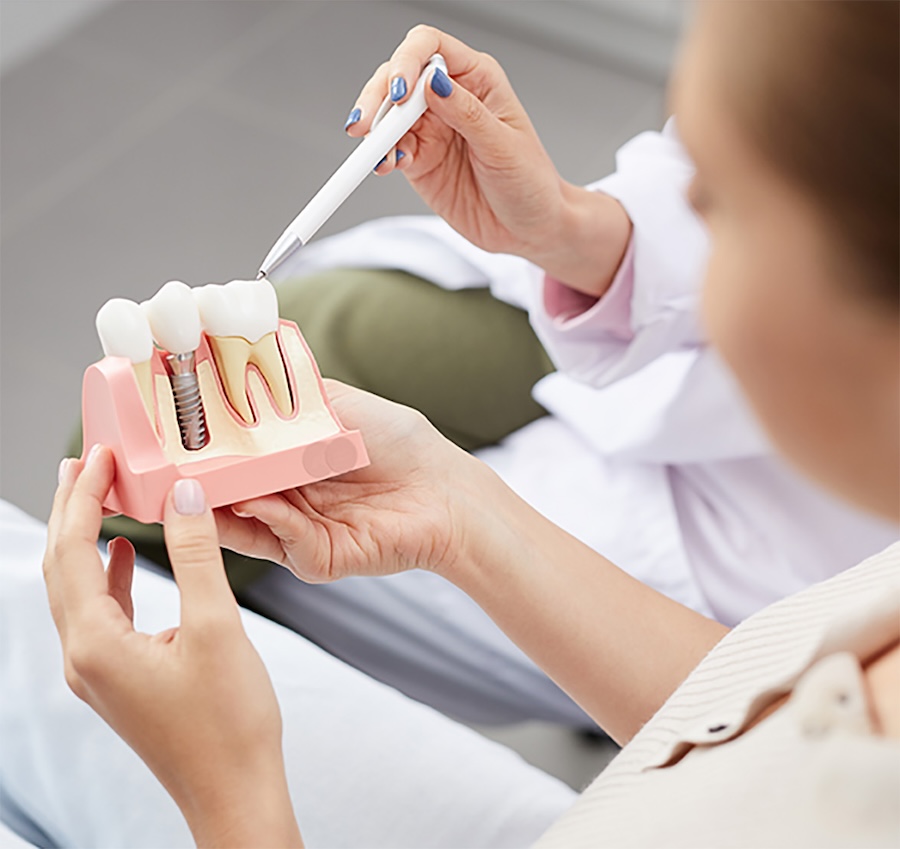
Dental implants are one way to replace a missing tooth from the root up. A small titanium post is placed in the jawbone, and after the area heals, a custom crown is attached above the gumline. Because the implant has its own support, the teeth on either side usually do not need to be reshaped.
Even so, implant treatment is not a one-visit fix. The gums and bone need to be healthy, the implant must heal securely, and some patients need an extraction or bone graft first. At Pomona Dental in Manvel, TX, Dr. Jimmy Le and Dr. Lily Nguyen evaluate the full picture before recommending treatment, including the damaged tooth, nearby teeth, jawbone, bite, and overall health.
What a Dental Implant Replaces
A natural tooth has a crown above the gum and a root beneath it. When the entire tooth is missing, replacing only the visible portion does not restore the same kind of support. A dental implant addresses that by replacing the missing root with a small post placed in the jawbone.
Once the implant has healed, a connector called an abutment is attached to it. The final crown then fits over that connector and fills the visible space. Together, those parts create a replacement designed to function much like a single natural tooth.
Implants can also support bridges or dentures when several teeth are missing. In those cases, the number of implants depends on the size of the space, the amount of available bone, and the type of restoration being planned. The same basic idea still applies: the implant provides support below the gum, while the restoration replaces the teeth above it.
The Existing Tooth May Still Be Saveable
Before planning an implant, Dr. Le or Dr. Nguyen will first look at whether the damaged tooth can still be repaired. A tooth with a solid root and enough healthy structure may respond well to root canal therapy, a buildup, and a crown. Saving the natural tooth is often considered when the long-term outlook is still reasonable.
Other teeth have reached a point where repair is less dependable. A split root, severe bone loss, or decay extending far below the gum may leave too little healthy structure to work with. In those cases, removing and replacing the tooth may offer a more stable result than continuing to rebuild it.
It helps to discuss implant options before the tooth is extracted whenever possible. The condition of the socket can affect whether an implant may be placed right away, whether grafting is recommended, and what temporary tooth options may be available. Planning ahead can also make the treatment sequence easier to understand.
Not Every Missing Tooth Needs the Same Approach
A missing wisdom tooth usually does not need to be replaced. A tooth far in the back may also have less effect on appearance or daily chewing than one closer to the front. Even so, the right decision depends on more than location alone.
When a space is left open, the nearby teeth may slowly lean into it. The tooth above or below the gap may also begin moving because it no longer has an opposing tooth to meet. Over time, those changes can affect the bite and make the area harder to restore later.
The dentists will consider how the gap affects chewing, appearance, cleaning, and the surrounding teeth. They can also explain what is likely to happen if the space remains untreated. That gives you a clearer basis for deciding whether an implant makes sense.
Healthy Gums Give the Implant a Better Start
Dental implants depend on healthy gum tissue and bone for support. If the gums are swollen, bleeding, or affected by periodontal disease, those concerns may need treatment before surgery. Reducing inflammation first can help create a cleaner and more stable environment for healing.
Treatment may include a professional cleaning, periodontal therapy, or changes to daily brushing and flossing. These steps are not separate from implant care; they are part of preparing the mouth for it. A strong result begins with healthy tissue around the future implant.
General health also plays a role in healing. Smoking, uncontrolled diabetes, certain medications, and previous healing problems can all affect the treatment plan. These factors do not always rule out implants, but they should be discussed openly before treatment begins.
The Jawbone Must Be Able to Support the Implant
After a tooth is lost, the bone in that area can gradually become thinner because it is no longer supporting a root. The amount of change depends on how long the tooth has been missing, whether infection was present, and how the socket healed. Some patients keep enough bone for straightforward implant placement, while others lose more support over time.
Digital imaging helps Dr. Le and Dr. Nguyen measure the height, width, and shape of the available bone. It also shows nearby roots, nerves, and sinus spaces that need to be considered before surgery. Those images help determine whether the implant can be placed safely and at the right angle.
When enough bone is present, treatment may move forward without an additional procedure. When support is limited, bone grafting may be recommended first. The decision usually becomes clearer after the exam and imaging are complete.
What Bone Grafting Involves
A bone graft adds material to an area where the jaw needs more support. It may be placed when the tooth is removed, before implant surgery, or at the same visit as the implant in selected cases. The timing depends on how much bone is missing and whether the implant can be held securely.
The graft acts as a framework while the body forms new bone through the area. Because that process takes time, a larger graft may need several months of healing before implant placement. Smaller grafts may sometimes be completed during another stage of treatment.
Needing a graft is not unusual, especially when a tooth has been missing for years or infection damaged the socket. It does not mean the implant is unlikely to work. It simply means the area needs more preparation before the implant can have a stable foundation.
Can the Implant Be Placed at the Time of Extraction?
Sometimes an implant can be placed during the same visit as the extraction. This may reduce the number of surgical appointments and shorten part of the treatment sequence. However, the socket must have enough healthy bone to hold the implant firmly from the start.
The position of the old root also matters. An implant must be placed for the future crown, which may require a different angle than the original tooth socket provides. For that reason, immediate placement is based on the final result rather than convenience alone.
If infection, bone loss, or socket damage is present, it may be better to wait. The area may be grafted or allowed to heal before the implant is placed. Although that adds time, it can give the implant a stronger and more predictable starting point.
The Implant Needs Time to Heal
After the implant is placed, the surrounding bone begins attaching to its surface. This process is called osseointegration, and it usually takes several months. The connection that forms during this stage is what gives the implant its long-term stability.
The gums may feel sore for a few days after surgery, but most of the healing period is quiet. You may feel back to normal well before the implant is ready for the final crown. Even then, the bone still needs time to strengthen around the post.
The exact timeline varies from person to person. Bone quality, grafting, implant location, overall health, and how well the site heals all affect the schedule. Dr. Le or Dr. Nguyen will monitor the area before moving on to the restorative phase.
Temporary Tooth Options During Healing
Patients replacing a front tooth often worry about having a visible gap for several months. Depending on the site, a temporary removable tooth, temporary bridge, or another short-term option may be available. The goal is to maintain appearance without placing too much pressure on the healing area.
A temporary restoration usually feels different from the final crown. It may be lighter, less secure, or designed mainly for appearance rather than heavy chewing. Those limits help protect the implant or graft while the bone heals.
A missing back tooth may not need a temporary restoration at all. Since the space is less visible, leaving it open during healing may be the safest option. These choices can be discussed before treatment begins so you know what to expect.
What Implant Placement Feels Like
The area is numbed before the implant is placed. During the procedure, you may feel pressure or vibration, much like you would during other dental treatment. You should not feel sharp pain once the area is fully numb.
Pomona Dental also offers nitrous oxide and oral conscious sedation for patients who feel anxious about treatment. The best option depends on your health history, comfort level, and the amount of work being completed. Discussing anxiety ahead of time allows the team to plan for a calmer visit.
Mild soreness and swelling are common afterward. Recovery may feel more noticeable when an extraction or bone graft is completed during the same appointment. Even so, many patients are able to return to light daily activities fairly quickly.
What Happens After the Implant Heals
Once the implant is stable, an abutment is attached to it. This small connector sits between the implant in the bone and the crown above the gumline. It gives the final restoration a secure point of attachment.
A scan or impression records the implant position, nearby teeth, and bite. The crown is then made to fit the available space and blend with the surrounding teeth. Its shape affects both appearance and the way it handles chewing pressure.
When the crown is placed, the bite is checked carefully. It should feel comfortable and should not contact too heavily before the other teeth. Small adjustments may be made so the crown fits naturally into the bite.
The Implant and Crown Are Separate Parts
People often use the word “implant” to describe the whole replacement, but the implant and crown are different pieces. The titanium post sits inside the jawbone, while the crown is the visible part used for chewing. The abutment connects the two.
That distinction becomes helpful later because the parts may age differently. The implant may remain healthy while the crown eventually wears, chips, or needs replacement. This is similar to a crown on a natural tooth wearing out even when the root beneath it is still sound.
A problem with the crown does not automatically mean the implant has failed. Dr. Le or Dr. Nguyen can examine the area and determine whether the issue involves the restoration, the connection, or the implant itself. In many cases, the concern can be addressed without replacing the entire implant.
Dental Implants Still Need Daily Cleaning
An implant cannot develop a cavity, but plaque can still collect around the crown and gumline. If that buildup remains, the gums may become inflamed and the supporting bone can be affected. Daily cleaning is therefore just as important around an implant as it is around natural teeth.
Brush carefully around the crown and clean between it and the neighboring teeth. Depending on the shape of the restoration, floss, an interdental brush, or a water flosser may work best. The right tool is the one that reaches the area comfortably and is easy to use every day.
Implant-supported bridges and dentures often require special cleaning underneath them. Those spaces can trap food and plaque even when the restoration looks clean from above. The Pomona Dental team can show you where buildup tends to collect and how to reach it.
Grinding Can Affect the Restoration
Clenching and grinding place repeated pressure on natural teeth, crowns, and implants. Because implants do not have the same cushioning ligament as natural tooth roots, heavy force can be transferred directly to the crown, abutment, and implant. Over time, that pressure may contribute to wear or loosening.
Tell Dr. Le or Dr. Nguyen if you wake with jaw soreness, have worn teeth, or have broken crowns in the past. Those signs may point to nighttime grinding or strong clenching habits. A nightguard may be recommended to help spread the pressure and protect the restoration.
The bite should also be checked if the implant crown begins feeling sore or seems to contact first. A small imbalance may not feel dramatic at first, but repeated force can become uncomfortable. Early adjustment is usually easier than waiting for the problem to worsen.
How Long Does the Process Take?
A straightforward implant case may move from placement to the final crown within several months. The schedule may be longer when an extraction, bone graft, gum treatment, or added healing is needed. Since every starting point is different, there is no single timeline that fits everyone.
Most of the waiting period is for the bone to heal around the implant. Although that stage can feel slow, it is what allows the implant to become stable enough for regular chewing. Moving too quickly could place unnecessary pressure on a site that is still healing.
After the exam and imaging, Dr. Le or Dr. Nguyen can give you a clearer estimate. They can also explain which steps may happen together and which ones need separate healing time. That makes the process easier to plan around work, travel, and daily responsibilities.
Understanding the Cost
Replacing one tooth may involve several parts of treatment. Depending on the case, the estimate could include imaging, extraction, bone grafting, implant placement, the abutment, a temporary tooth, sedation, and the final crown. This is why implant costs can vary widely between patients.
Two estimates may also look different because they do not always include the same services. One may cover the full process, while another may list only the surgical placement. Comparing the details is more helpful than comparing the total alone.
Ask what is included and whether any step is likely to be added later. Pomona Dental can also review insurance benefits and payment options before treatment begins. Having that information early can make the financial side of care easier to manage.
Questions to Ask During the Consultation
Start by asking whether the current tooth can still be saved. If extraction is recommended, ask whether the implant could be placed at the same appointment or whether the socket should heal first. Those answers will shape the rest of the timeline.
It is also useful to ask about bone grafting, temporary tooth options, healing time, and the total expected cost. You may also want to know how many visits are likely and when normal chewing can resume. These questions help turn a complex process into a clearer sequence of steps.
Be sure to mention gum disease, smoking, grinding, anxiety, medical conditions, and any past problems with healing. These details can affect both the surgery and the recovery plan. The more complete the information is at the beginning, the more accurately treatment can be planned.
Dental Implants at Pomona Dental in Manvel
Dental implants may be a good option when a missing tooth affects chewing, appearance, or the position of nearby teeth. The best plan depends on the health of the gums, the amount of bone available, the bite, and whether the existing tooth can still be repaired. A careful evaluation helps answer those questions before treatment begins.
At Pomona Dental in Manvel, TX, Dr. Jimmy Le and Dr. Lily Nguyen can examine the area and explain what they see. They can discuss whether an implant is appropriate, whether grafting may be needed, and what the process may involve from the first visit through the final crown. Just as importantly, they can answer the practical questions about timing, temporary teeth, healing, and cost.
Schedule a consultation when you are ready to replace a missing tooth or need guidance before a damaged tooth is removed. Bring the questions that have been holding you back, even if they seem small. The Pomona Dental team will go through the options with you and help you feel ready for the next step!
Contact UsCategorised in: Dental Implants